Primary Sources & Family Archive

The Evidence

Photographs, documents, objects and traces scattered across four continents — surfacing slowly, recognised by nobody except the family that made them.

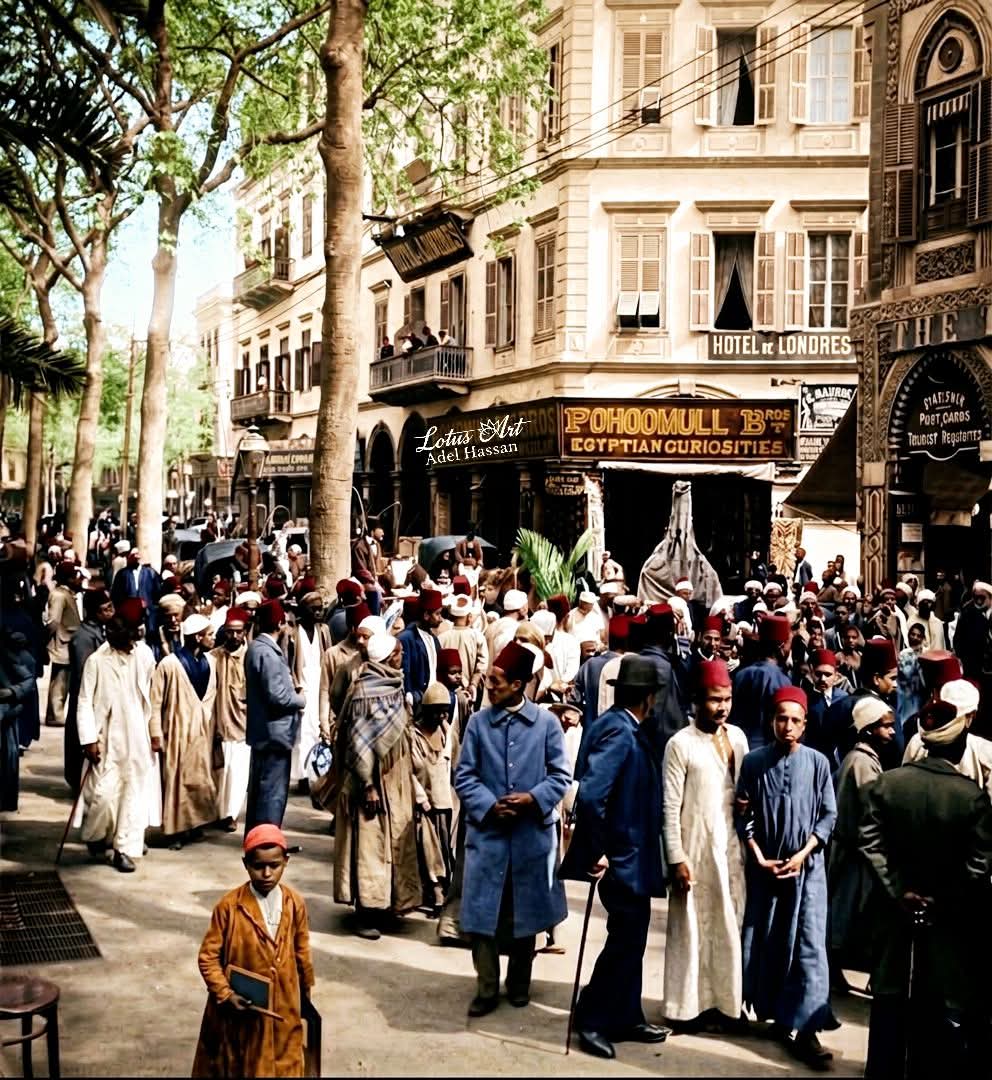
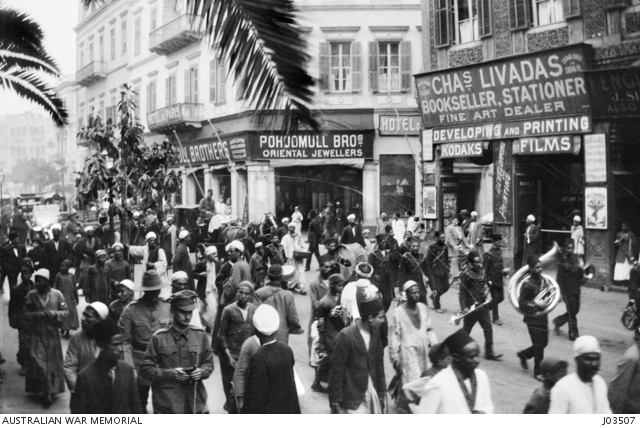
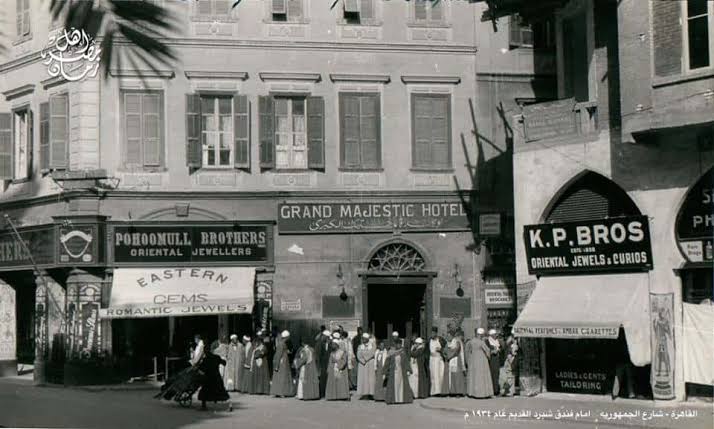
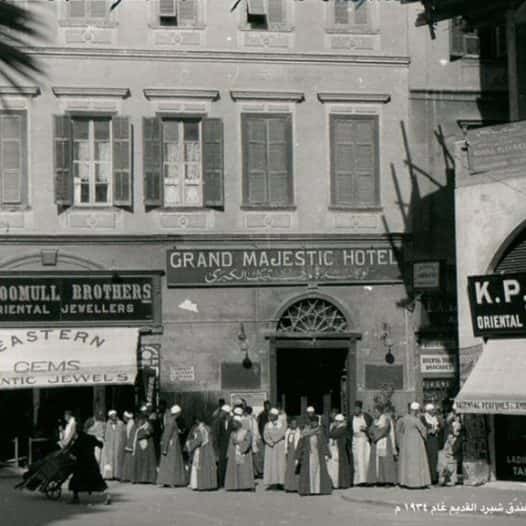
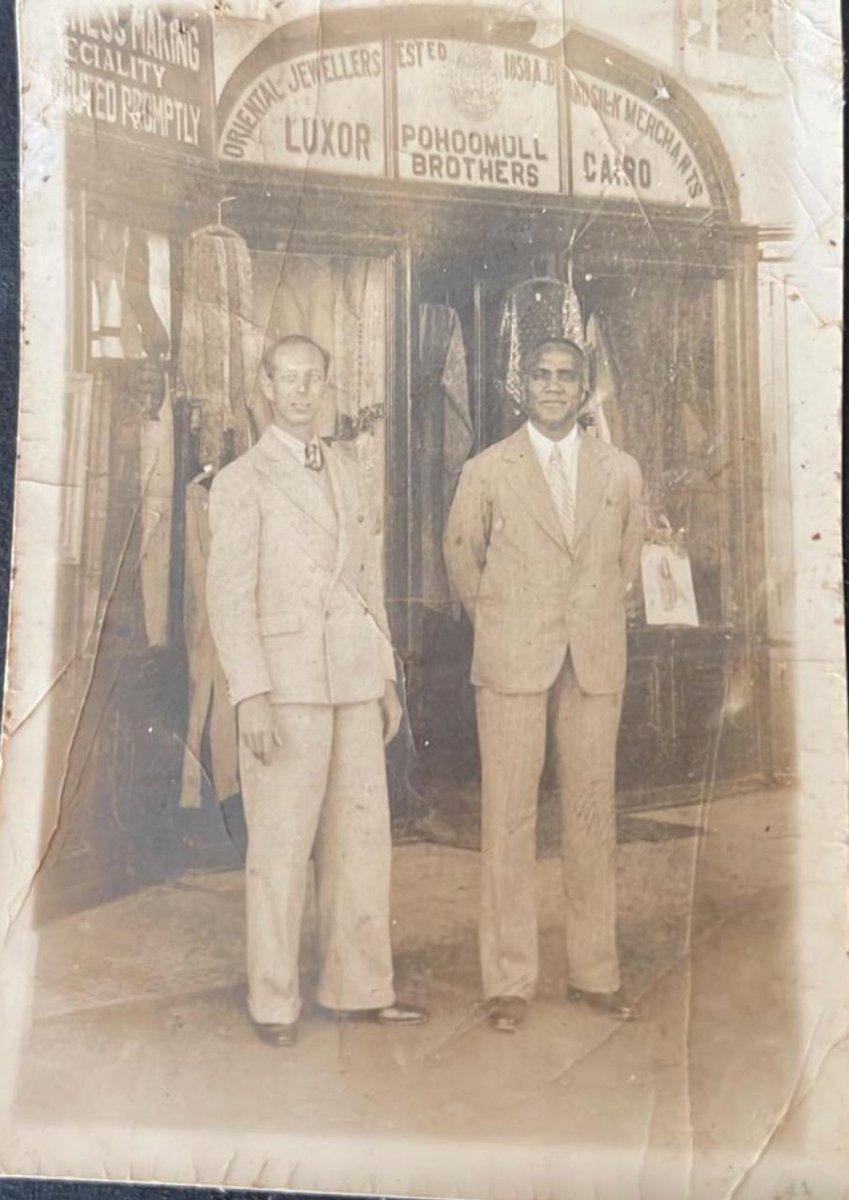
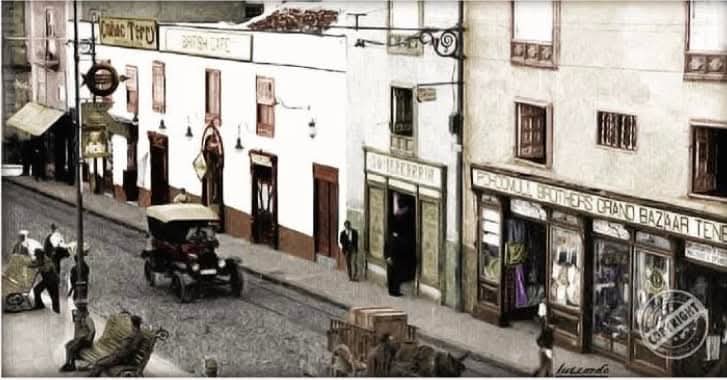
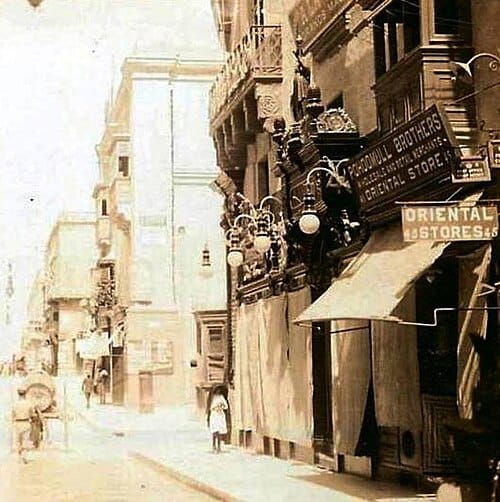
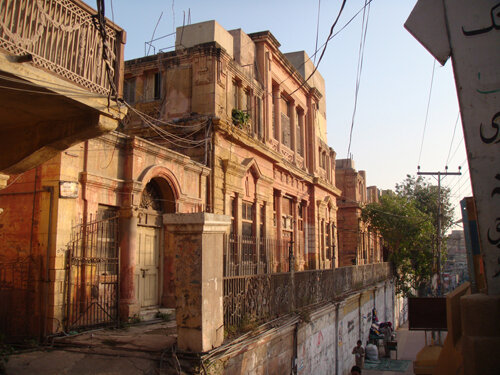
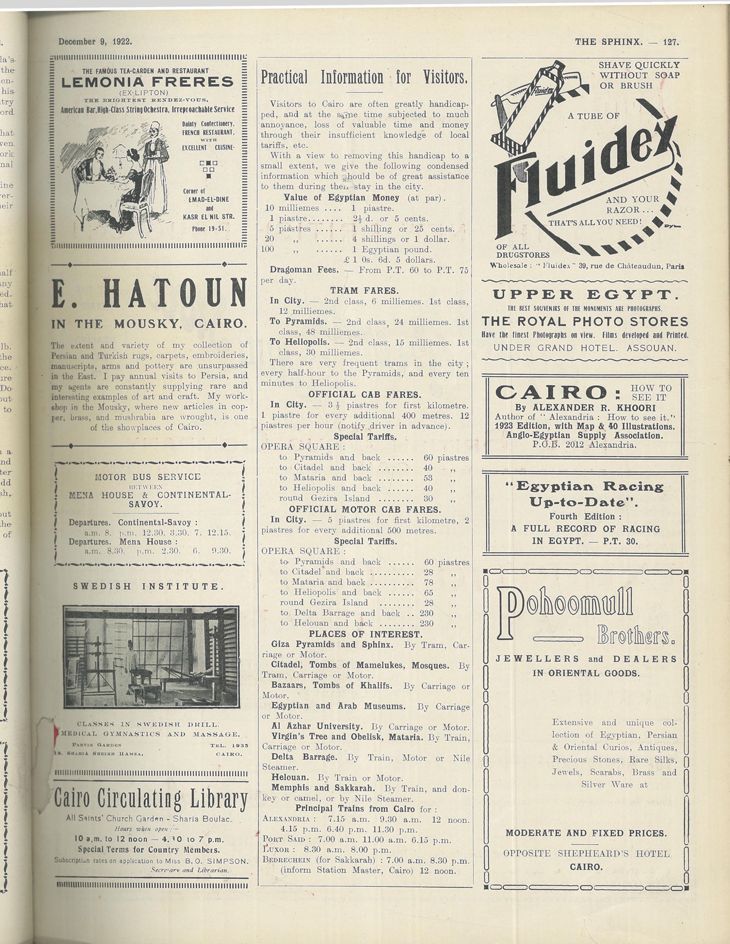
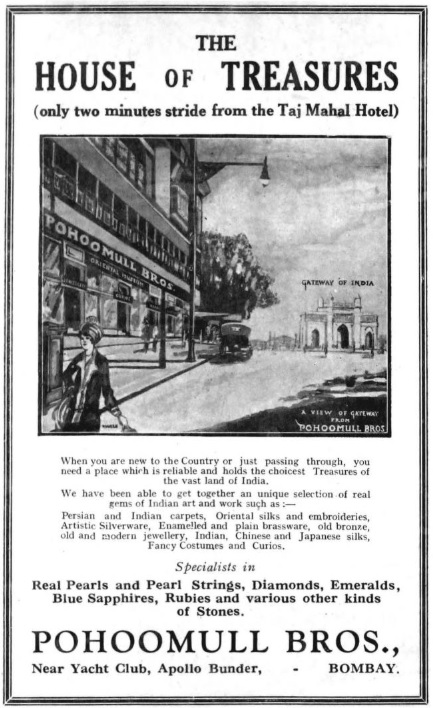
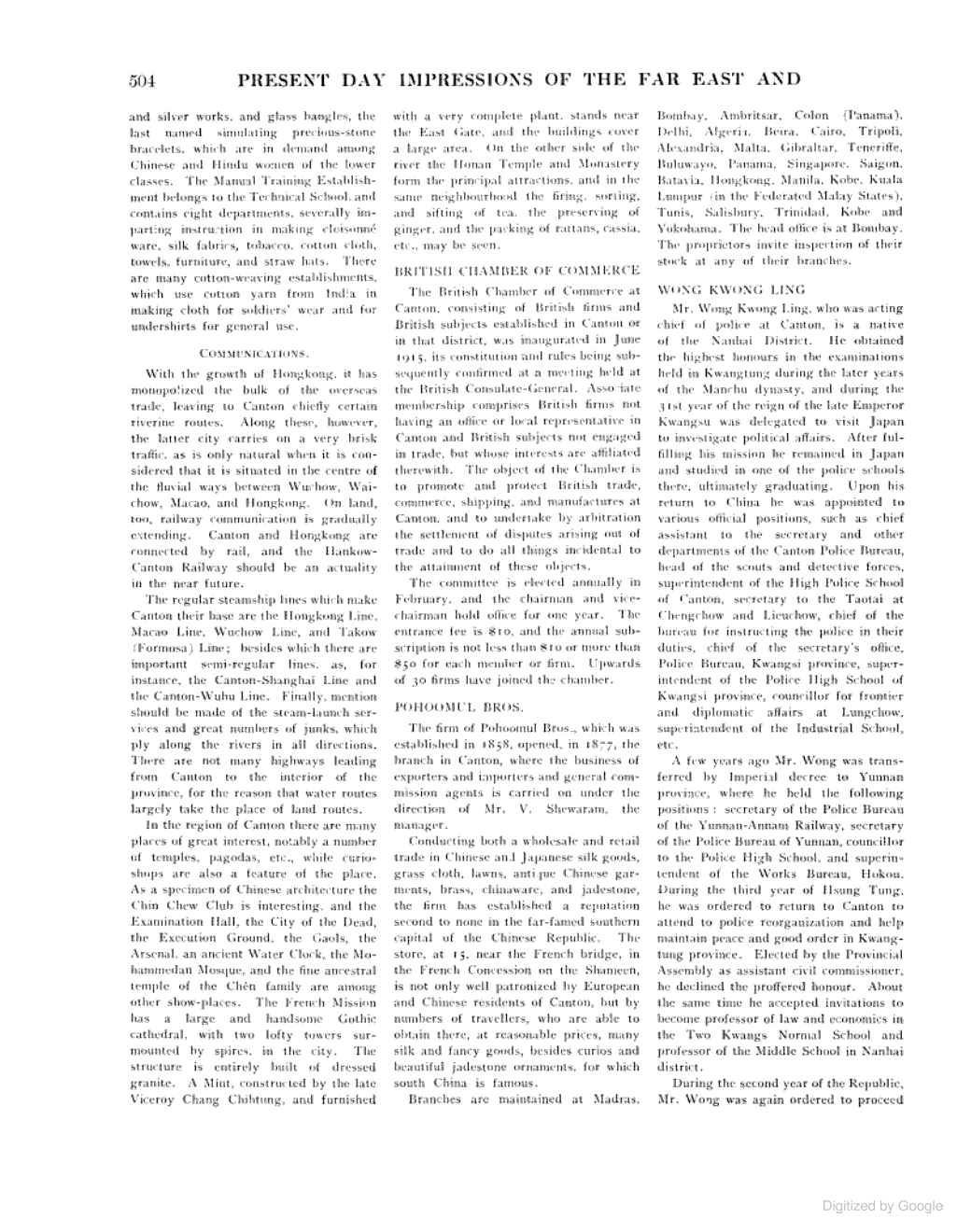
Photographs & Street Scenes
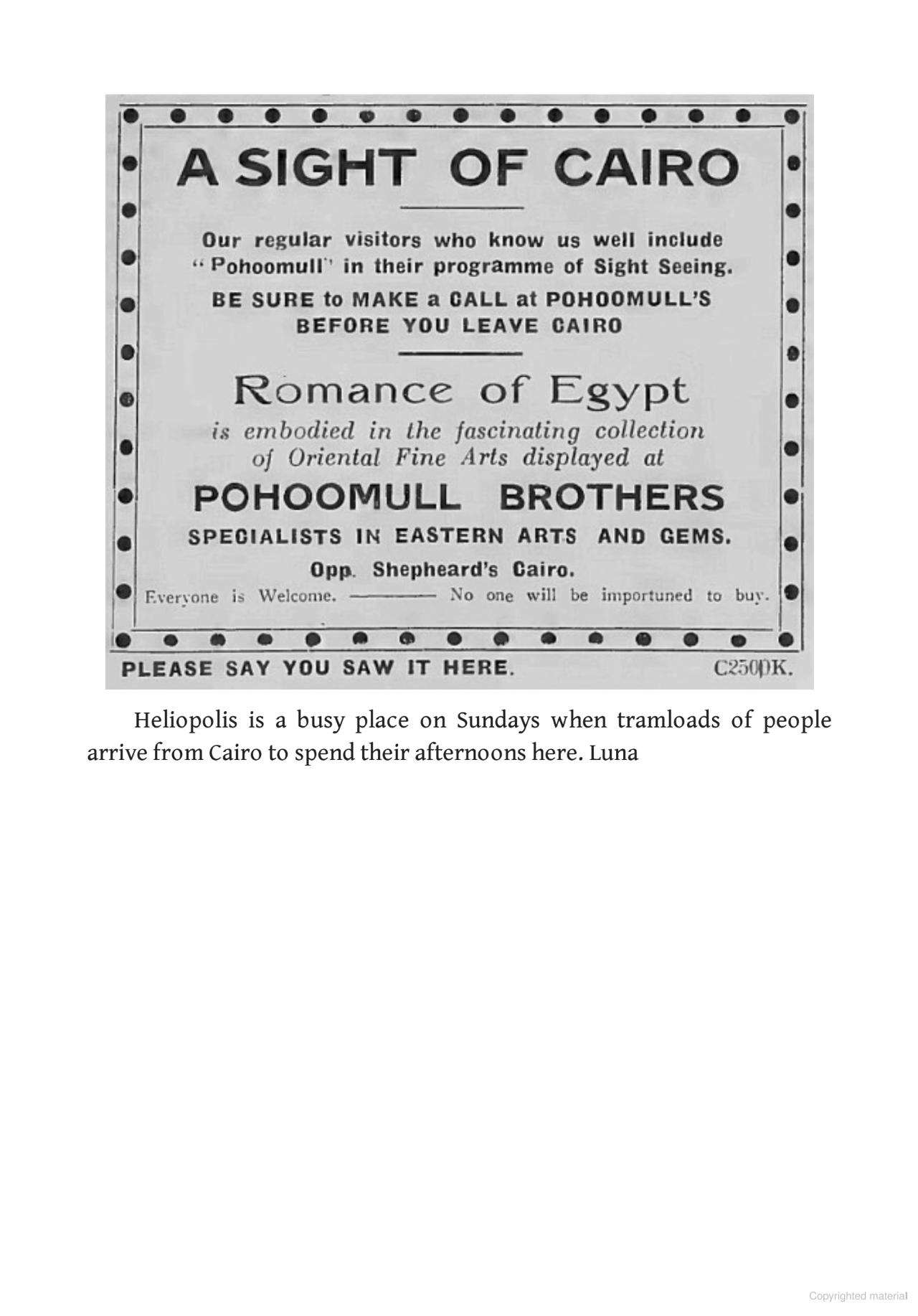
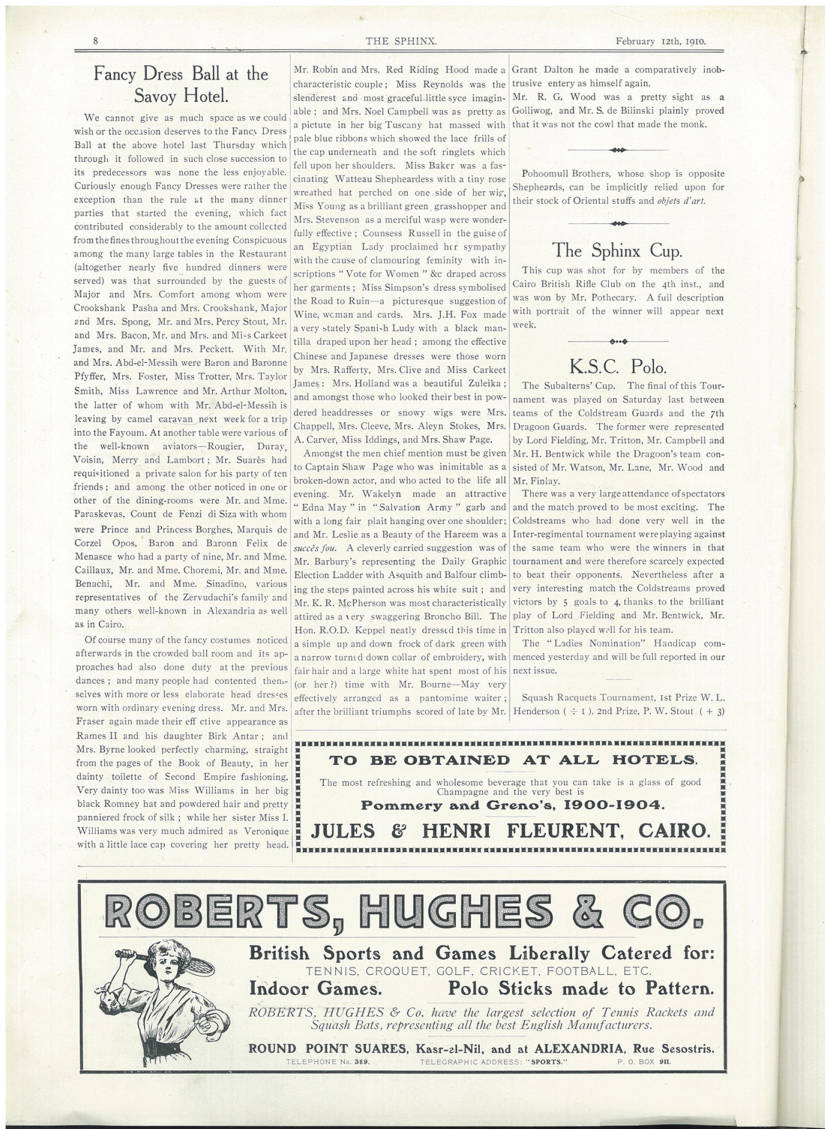
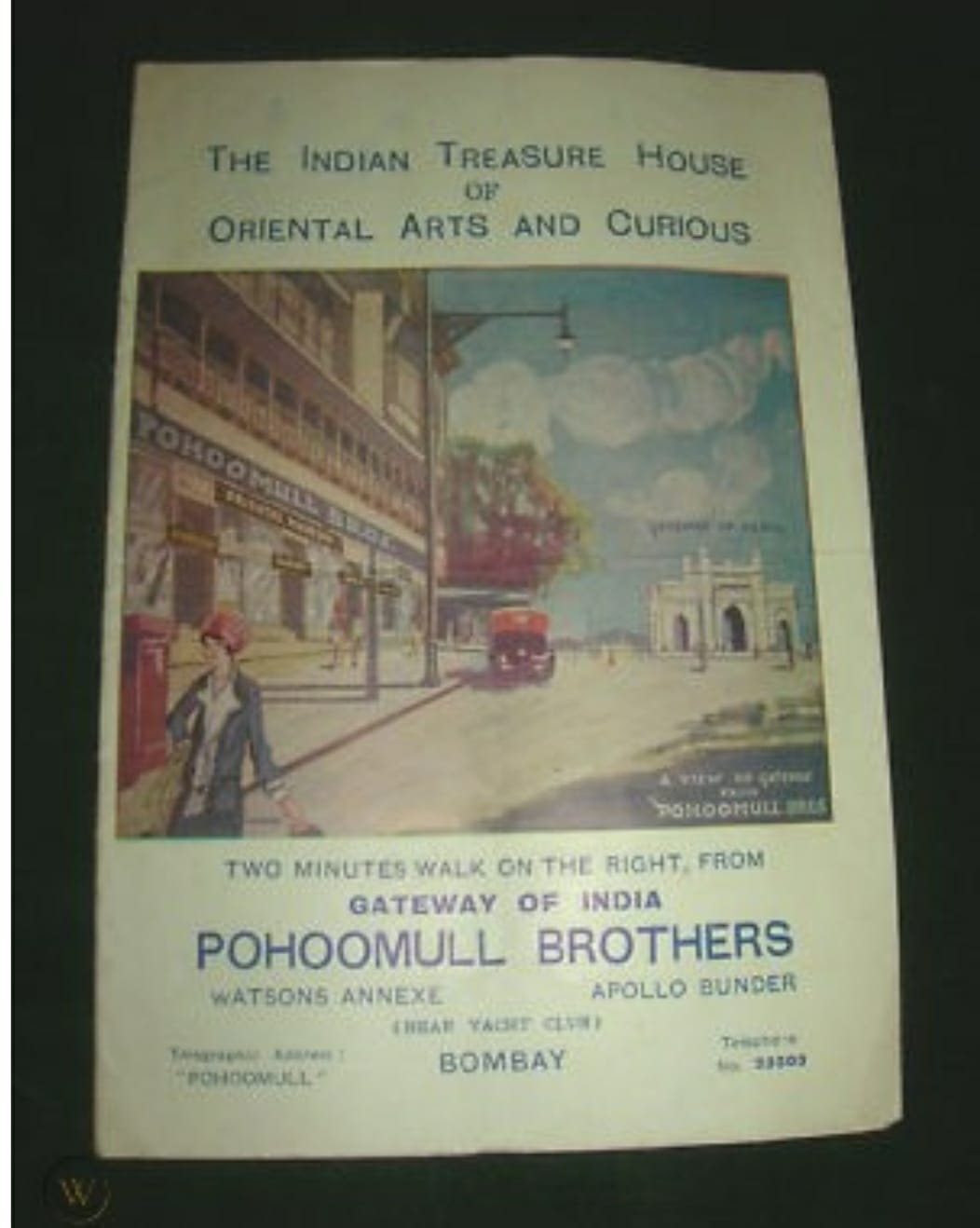
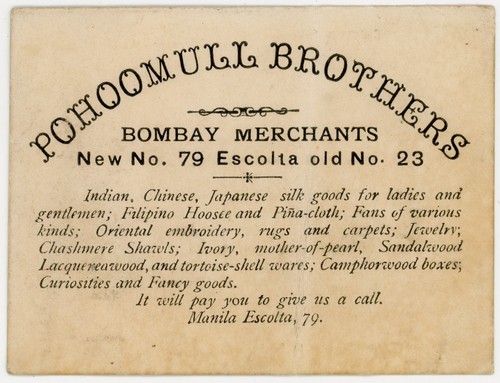
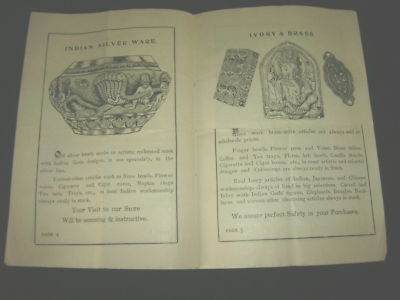
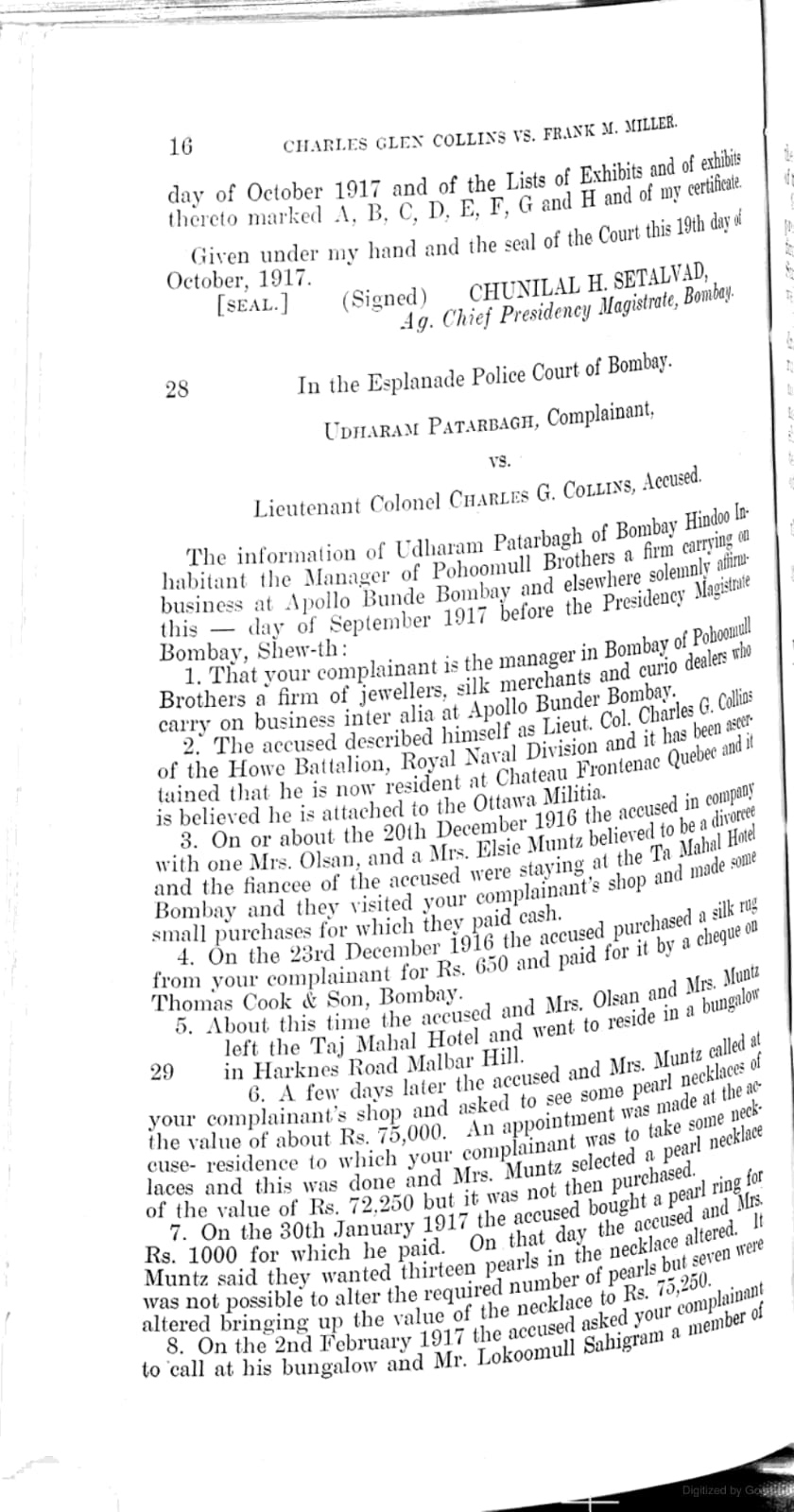
Advertisements & Documents
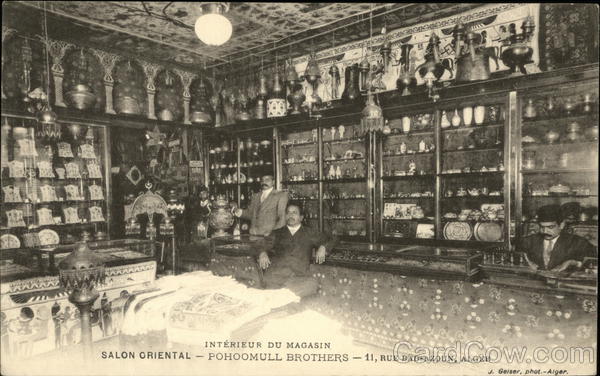
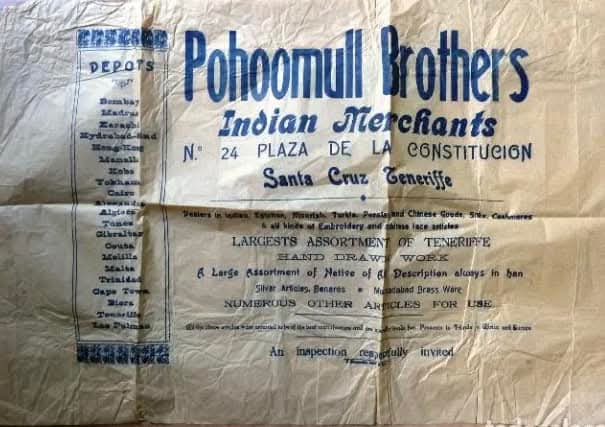
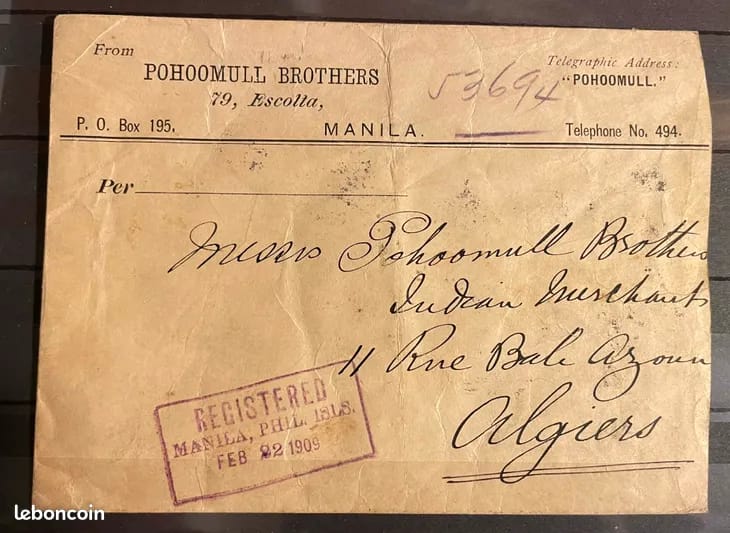
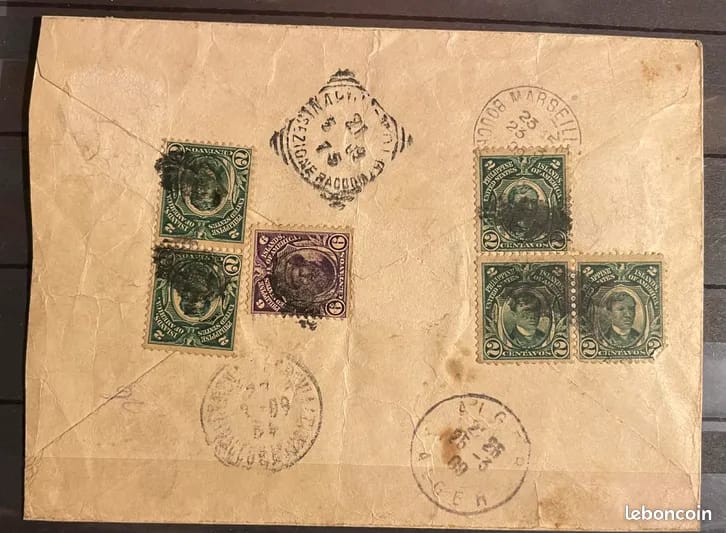
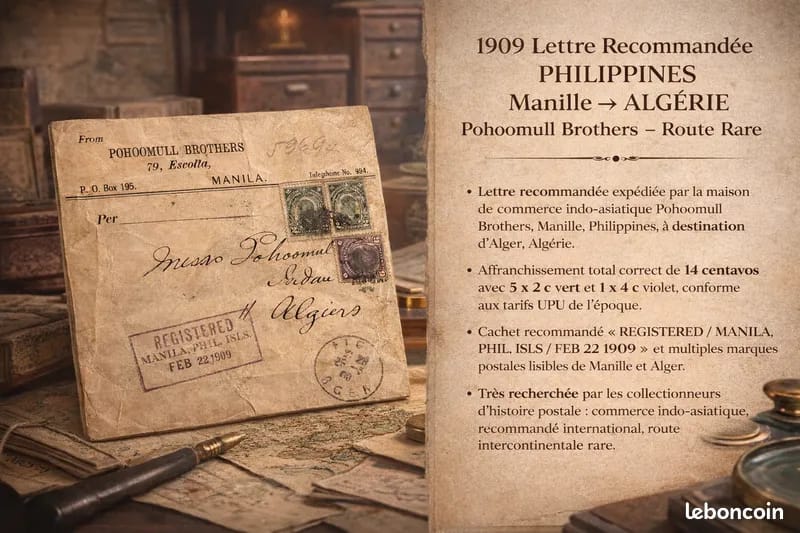
The First Internet — Manila to Algiers, 1909
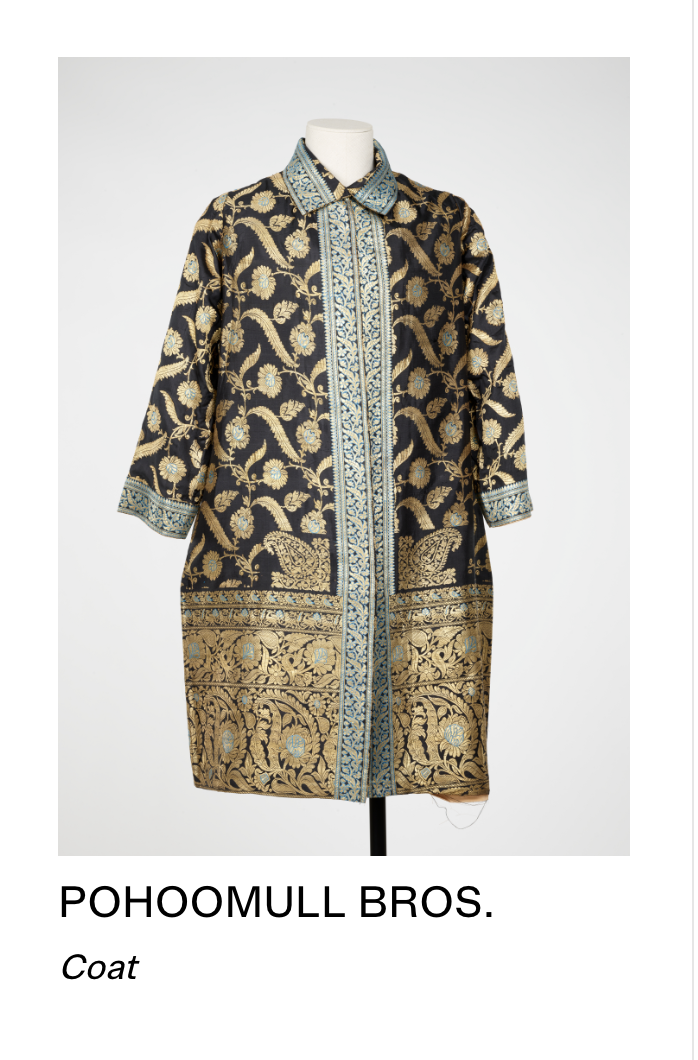
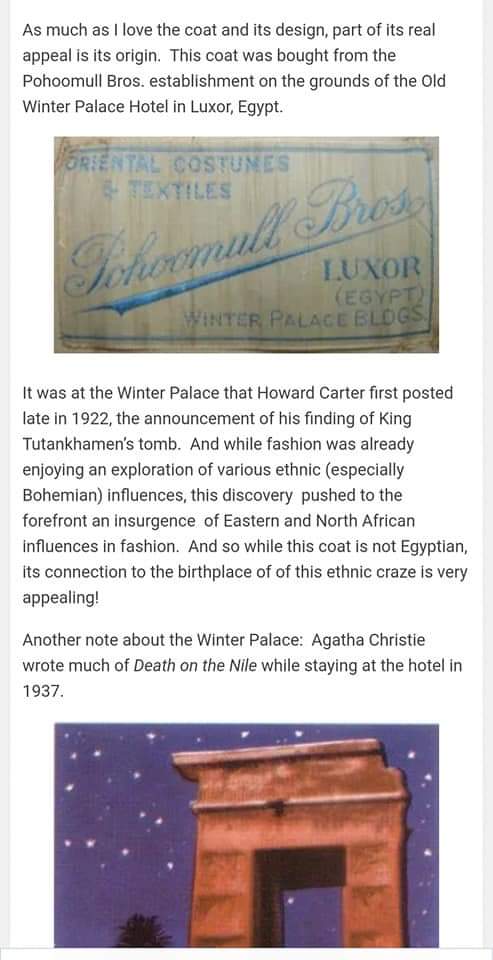
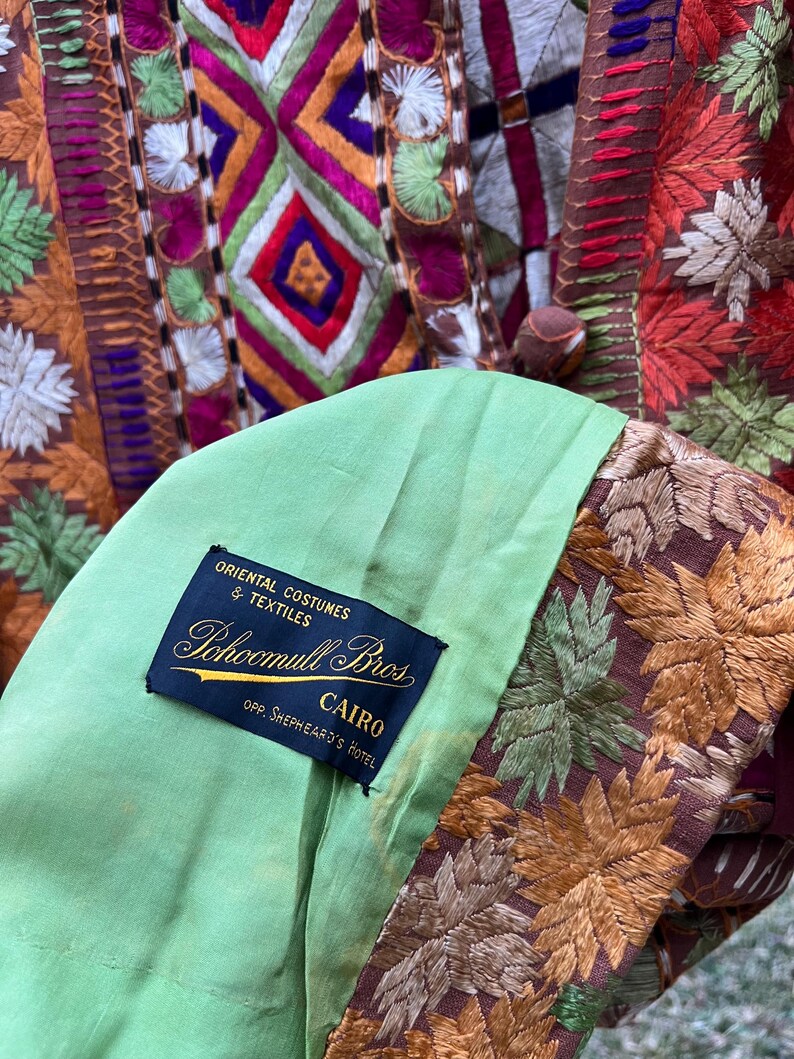
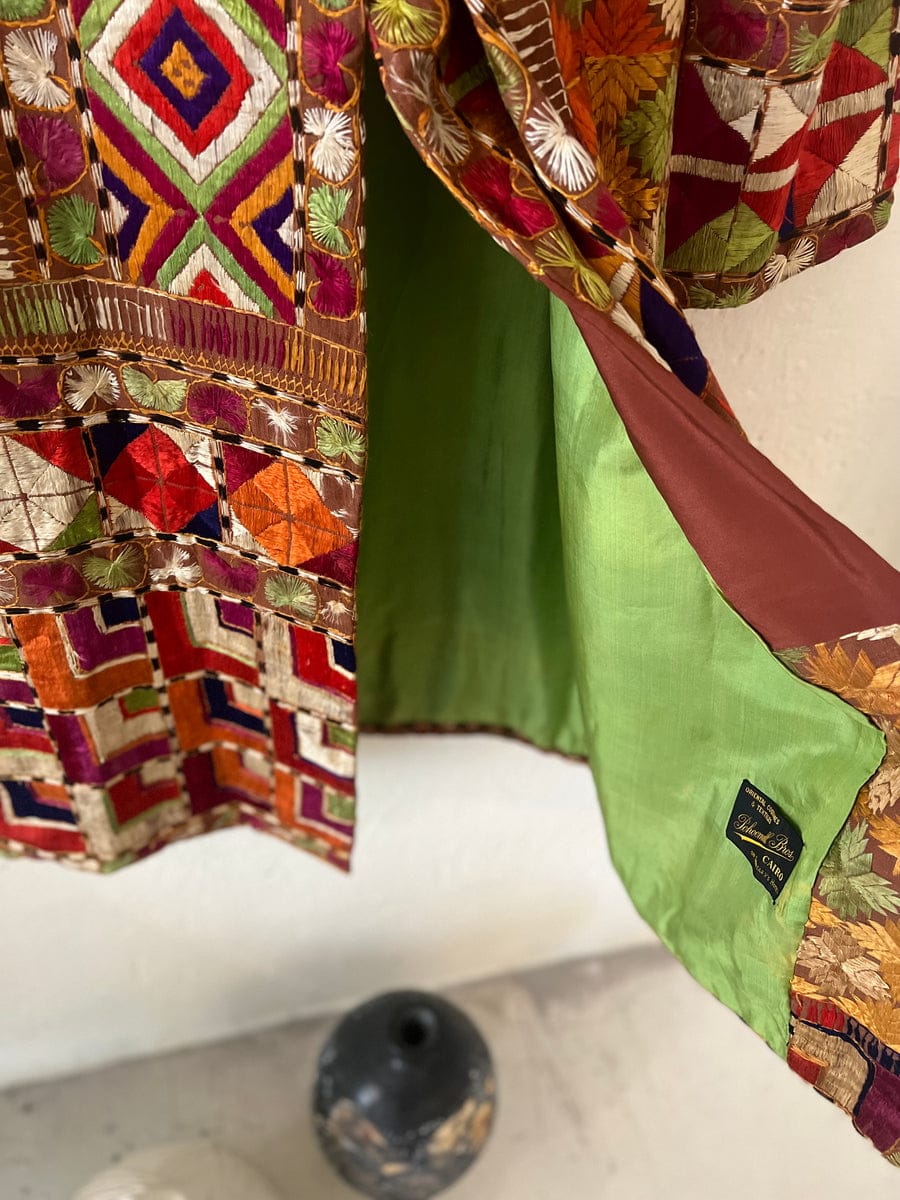
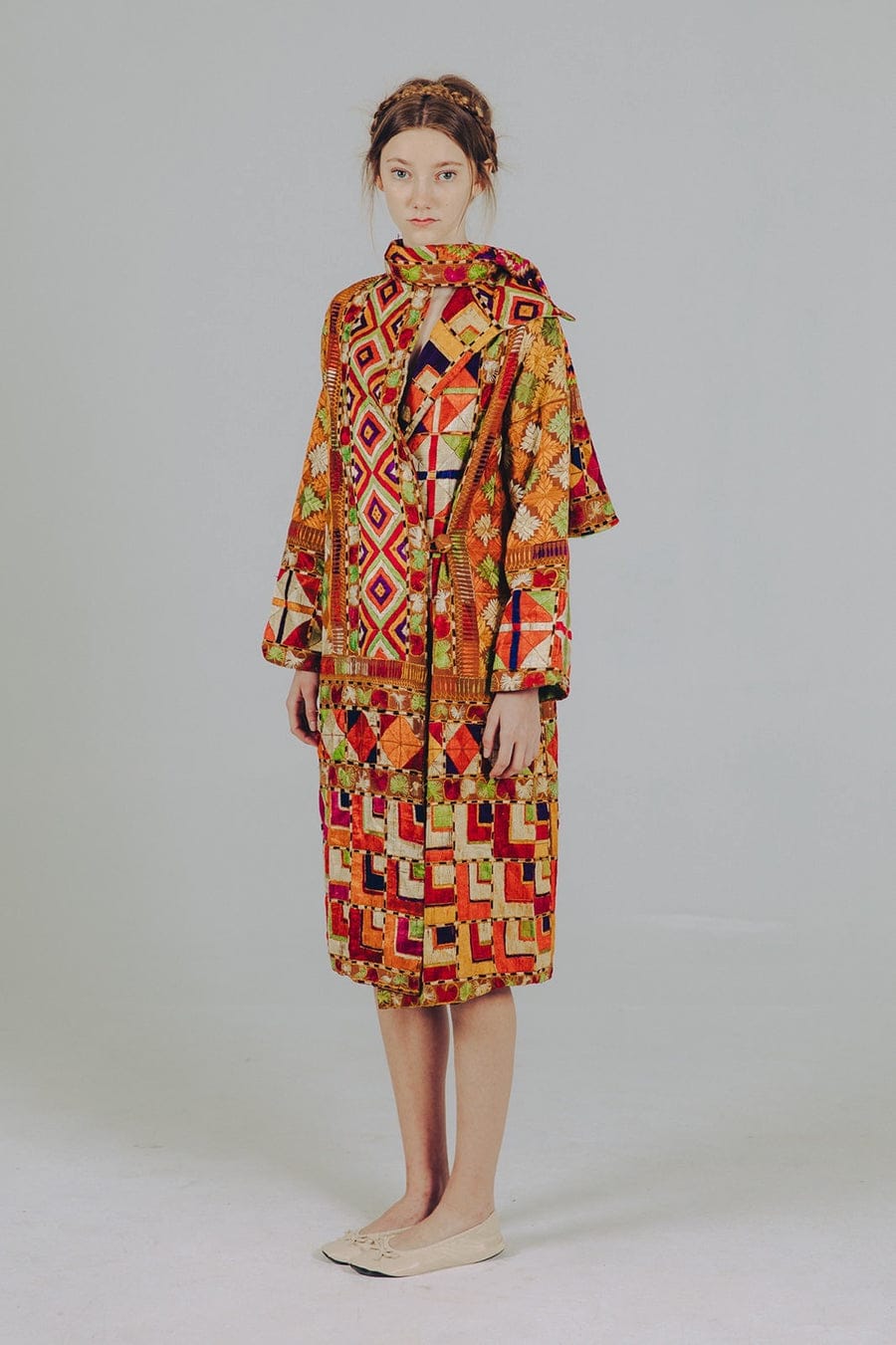
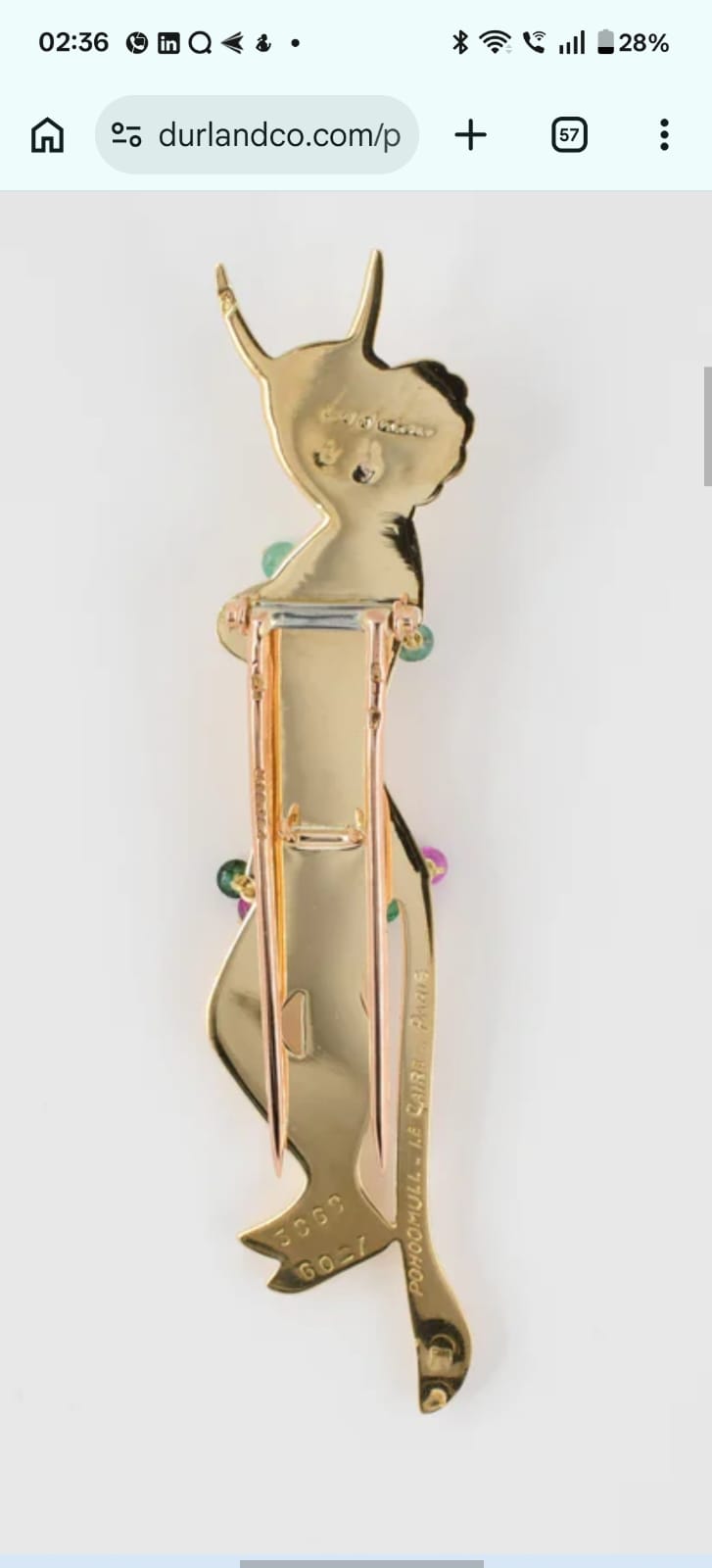
Objects — Textiles, Jewellery & Garments
The Global Trace — Auctions, Museums, Courts & Living Evidence
Bonhams, London · Lot 184 · Sold 30 April 2014
An Art Deco emerald and diamond necklace, circa 1930. Old brilliant and single-cut diamonds (~8.80 carats), two large Mughal-carved emerald drops. Fitted case stamped: "Pohoomull Bros, Oriental Jewellers, Cairo, Egypt." Sold for £35,000.
Major auction house provenance — luxury-tier jewellery confirmed
Imperial War Museums, London · Collection Item
A cream-coloured silk handkerchief with pale blue tassels, embroidered "Souvenir Of Egypt." Found with it: a business card for "Pohoomull Brothers, Oriental Merchants & Jewellers, Opposite Shepheard's Hotel, Cairo."
Pohoomull Brothers preserved in a British national museum collection
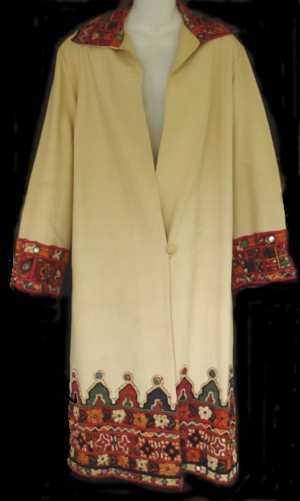
Augusta Auctions · Lot 245 · Sold 10 May 2022 · $1,050
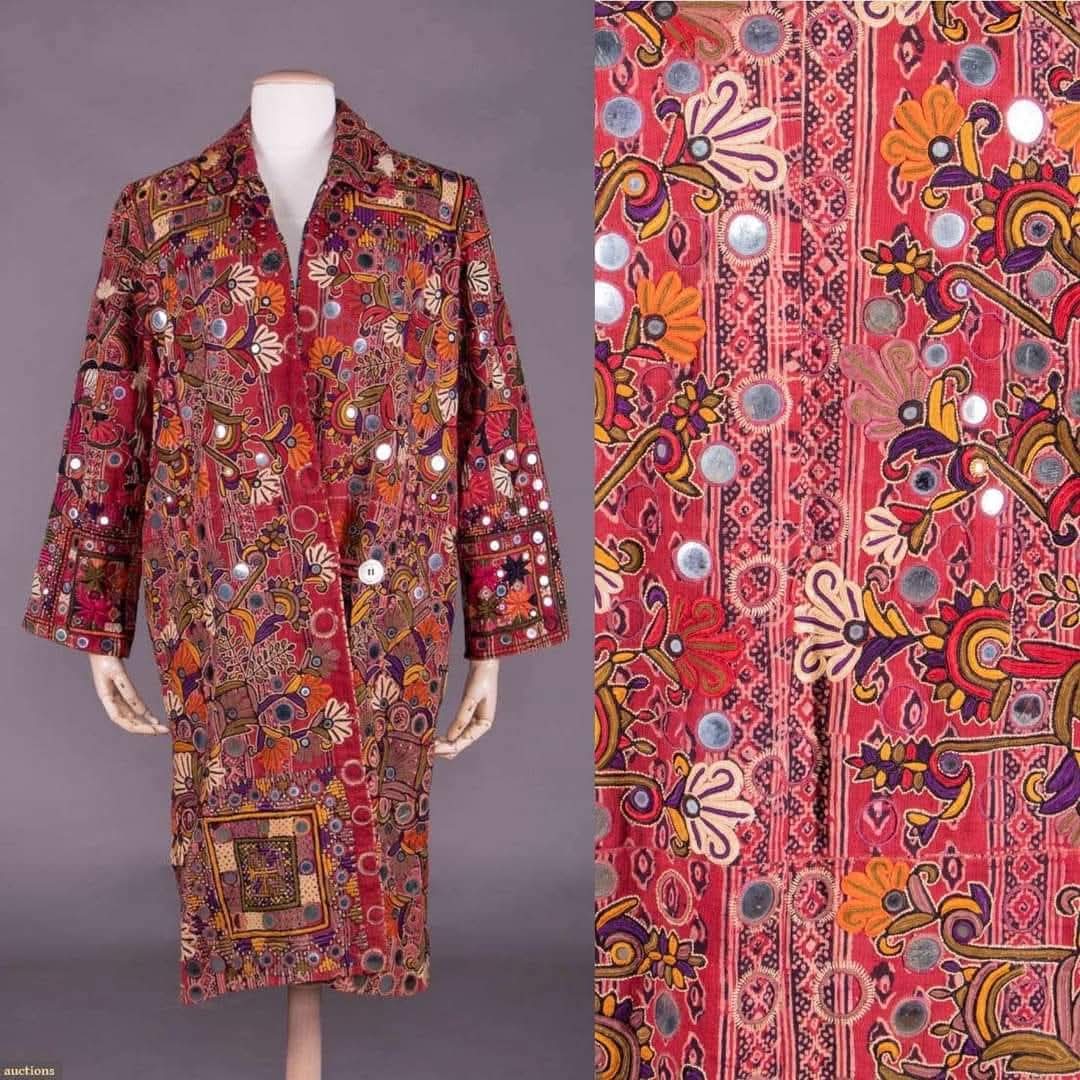
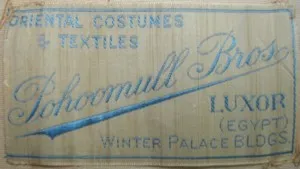
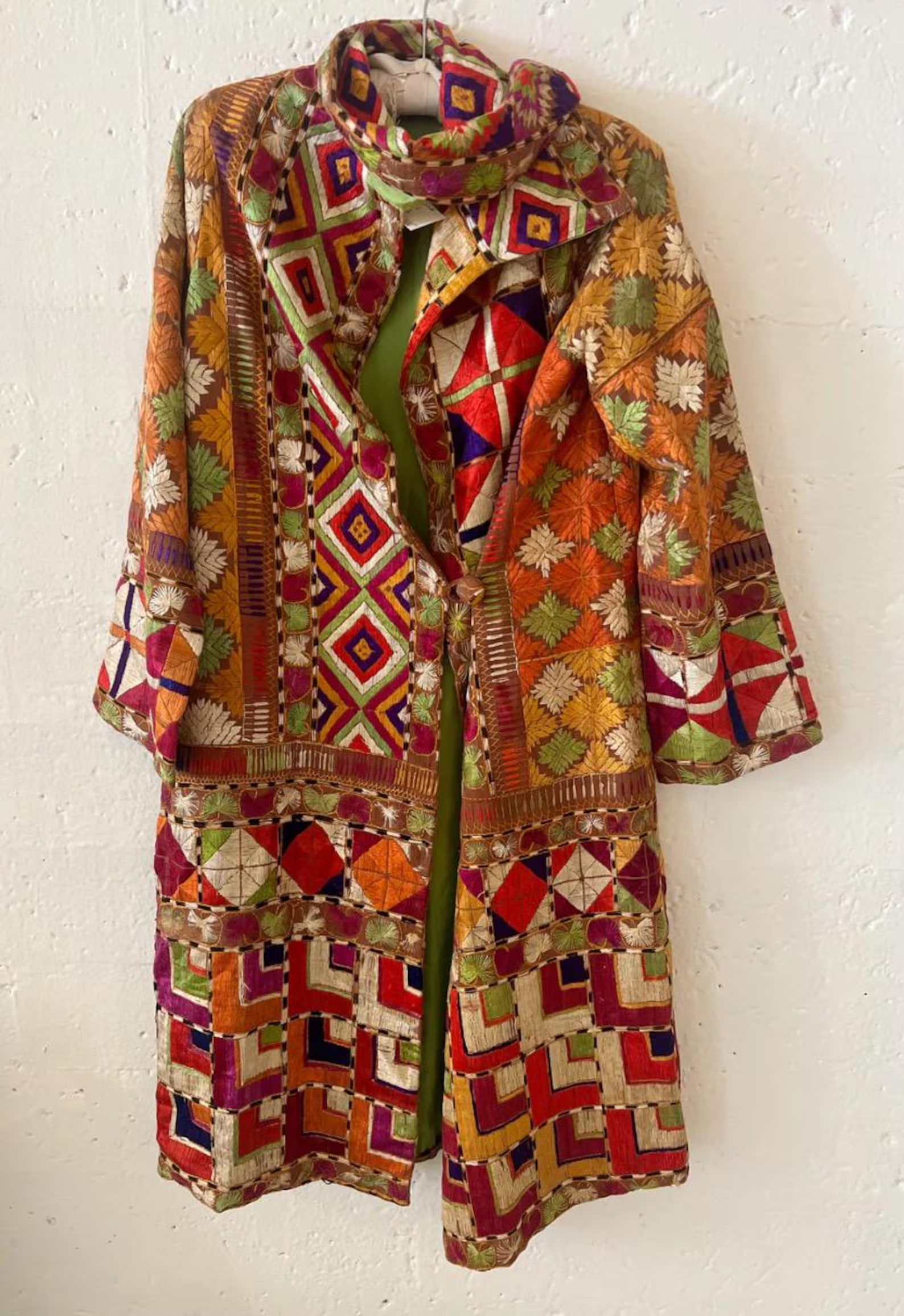
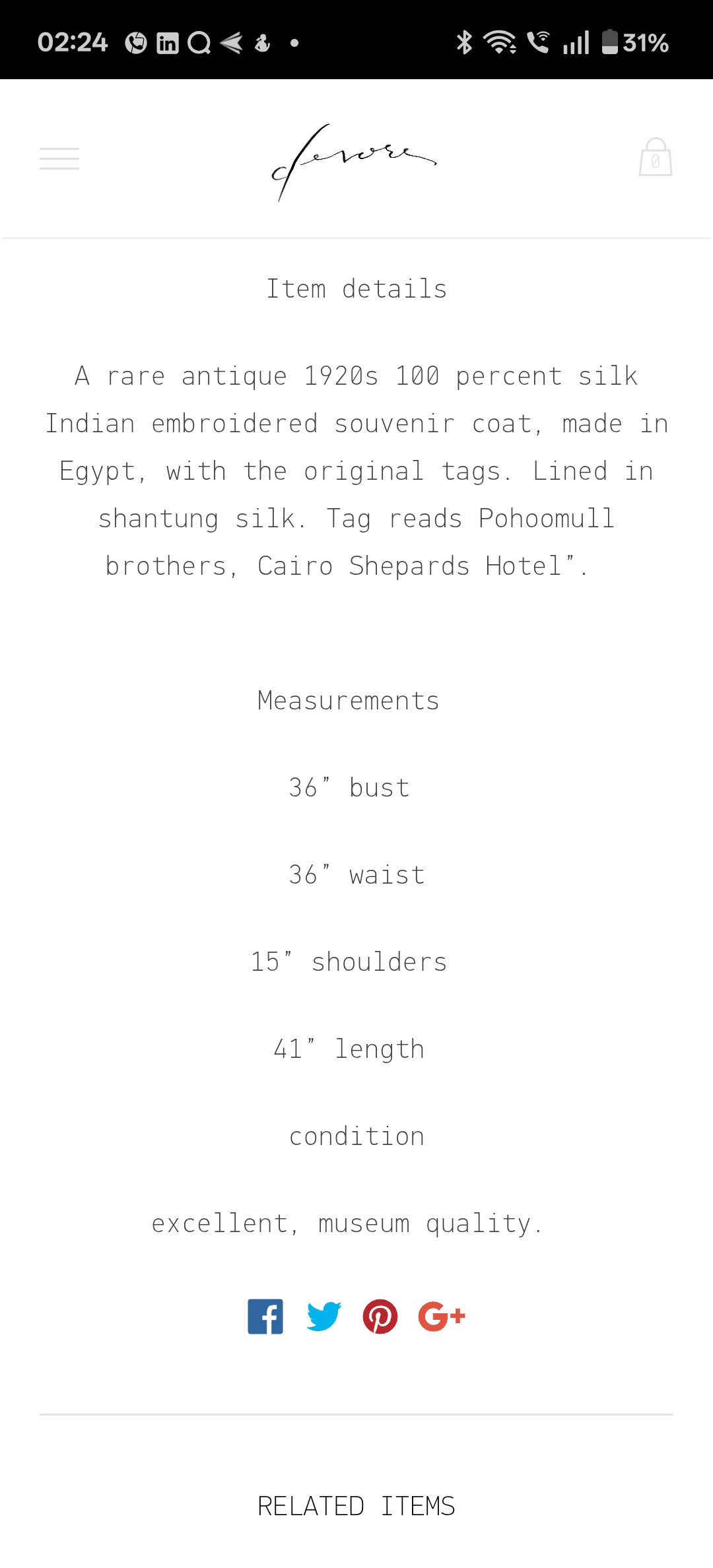
Indian embroidery and mirror work over resisted print heavy cotton, lined in silk shantung. Label reads: "Oriental Costumes & Textiles, Pohoomull Bros. Cairo Opp. Shepheard's Hotel." Condition: very good.
Formal auction house documentation of the Cairo label
UK National Archives, Kew
Pohoomull Brothers v. Arthur James Macdonald Bentley — court records preserved in the British legal archives.
British courts — litigation across empires
UK National Archives, Kew
Pohoomull Bros. v. P. Khubchand — a second case record preserved in the National Archives.
Two separate cases at Kew — the firm litigated globally
Philippine Supreme Court · G.R. No. L-4713 · March 22, 1910
Chatamal Teerthdass vs. Pohoomul Brothers — "On June 12, 1902, a contract was executed at Hyderabad, Sindh, India, where the plaintiff agreed to enter the service of Pohoomul Brothers." The defendants were merchants doing business in Manila and other places in the Philippine Islands.
Full text available online — the 1902 Manila employment contract in a Supreme Court ruling
Antique Appraisal · Pohoomull Brothers Scarab Ring · 1943
"A ring purchased from Pohoomull Brothers (India) in 1943. It is a scarab ring with carving of an Indian woman." Still being identified and appraised decades later.
Objects still surfacing — Egyptian-style scarab jewellery during WWII
Sahapedia · The Sindhworkis: A Unique Global Diaspora
The Algiers branch at 11 Rue Bab-Azoun operated an "Oriental Salon" with merchandise worth 3,000,000 francs. American writer Jessie Fauset, visiting in 1925–26, described proprietors offering "sweet, black Turkish coffee" alongside "pearls and sapphires, brasses and coppers, finely carved trays and vases, gorgeous incense burners."
A Harlem Renaissance writer walks into a Sindhi merchant shop
Scroll.in · Sindhi Migration and the Canary Islands
"In 1936 there were 200 Sindhi merchants in Spanish Morocco and 100 in the Canary Islands. Pohoomull Bros was one of 'the big seven' Sindhi firms with branches in these territories, alongside D. Chellaram, J.T. Chanrai, and M. Dialdas."
Classified among the seven largest Sindhi trading firms in the world
Wikipedia · Indian Maltese
"In 1887, Pohoomull Brothers applied to establish a shop in British-ruled Malta, marking the beginning of organised Sindhi commerce there. They are described as the predecessor of other Indian Maltese businesses."
The first Indian-owned business in Valletta — 1887
Vintage Fashion Guild · Label Database
Pohoomull Brothers — officially recognised in the Vintage Fashion Guild's international label database as a documented vintage fashion label.
The family name is a recognised label in the global vintage fashion community
Pohoomull Jewelers · 101–103 Main Street, Gibraltar · Present Day
The last surviving branch. Now an authorised retailer for Tissot, Oris, Versace, and Emporio Armani. Run by Renuka Nandwani (née Khiani), great-granddaughter of Moolchand Pohoomull. The shop has been open continuously since the 1890s.
Still open. Still Khiani. Still on Main Street.
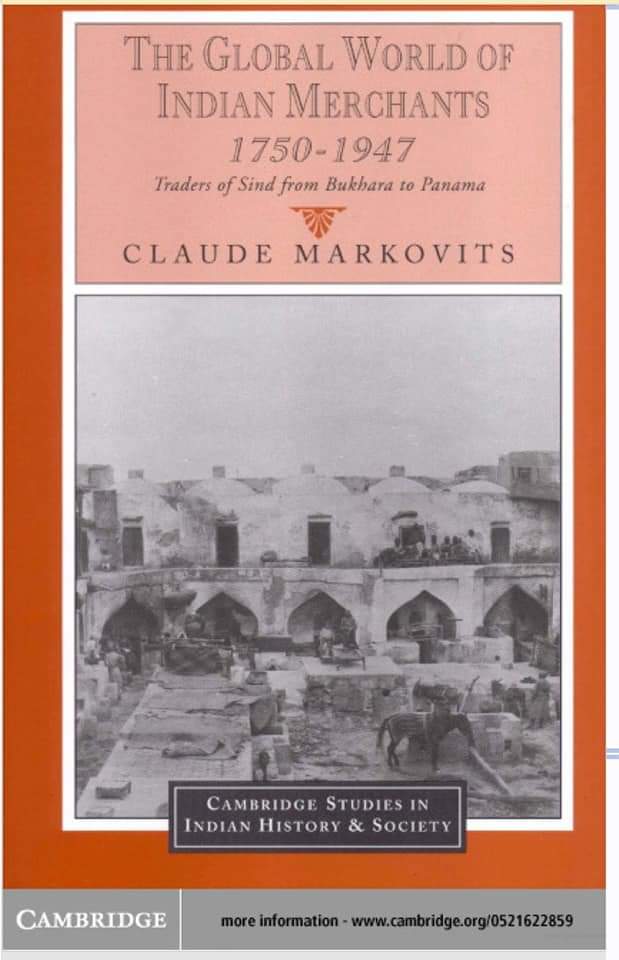
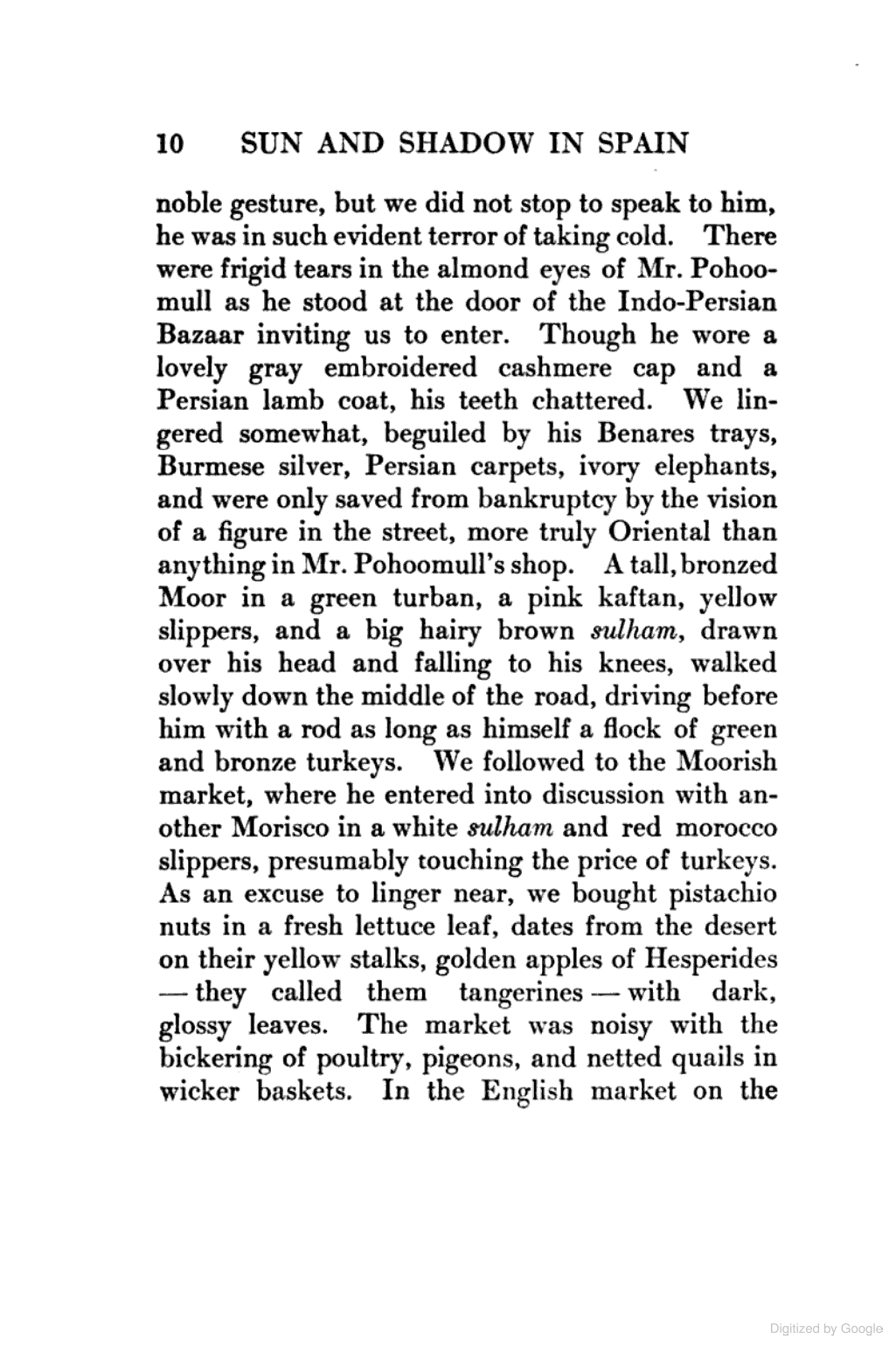
Academic Foundation — Claude Markovits, Cambridge University Press, 2000
Key Excerpts — Every Mention of the Khiani Family & Pohoomull Brothers
Page 125 · The Mother Firm
"There were a few 'mother firms' from which the entire network sprang. The two most important of these 'mother firms' were the firm of Pohoomull Bros, created in 1858, from which a good part of the western branch of the network originated."
The oldest and largest of all Sindwork firms
Page 133 · The Astrologer's Wager
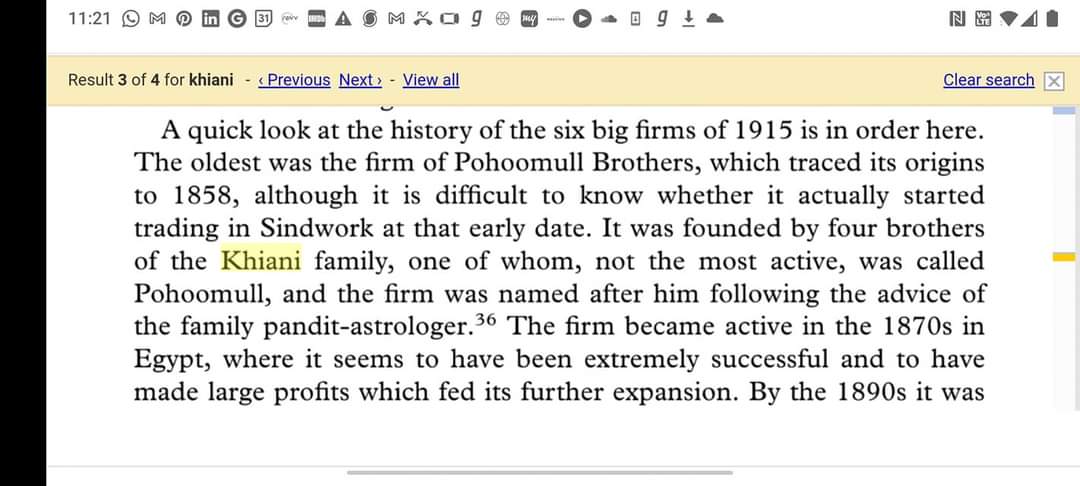
"The oldest was the firm of Pohoomull Brothers, which traced its origins to 1858. It was founded by four brothers of the Khiani family, one of whom, not the most active, was called Pohoomull, and the firm was named after him following the advice of the family pandit-astrologer."
Footnoted to Markovits's interview with Mr L. Khiani, Gibraltar, 4 September 1992
Page 133 · The 22 Branches
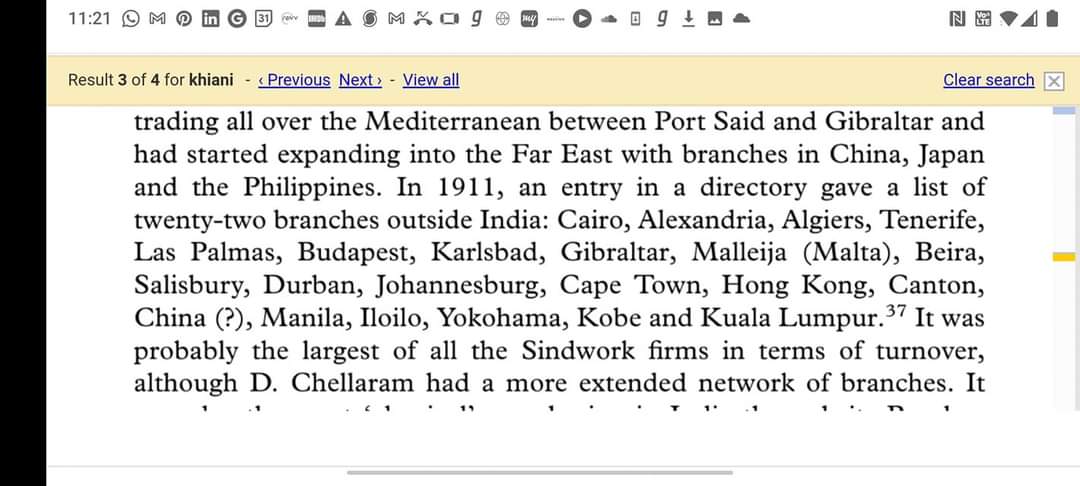
"In 1911, an entry in a directory gave a list of twenty-two branches outside India: Cairo, Alexandria, Algiers, Tenerife, Las Palmas, Budapest, Karlsbad, Gibraltar, Malleija (Malta), Beira, Salisbury, Durban, Johannesburg, Cape Town, Hong Kong, Canton, China (?), Manila, Iloilo, Yokohama, Kobe and Kuala Lumpur. It was probably the largest of all the Sindwork firms in terms of turnover."
The network at scale — five continents by 1911
Page 140 · Table 4.5
"Pohoomull Bros. (Europe) — Founded 1858, 17 branches. Pohoomull Bros. (India) — Founded 1858, 11 branches." Listed first among all major Sindwork firms of the 1930s.
Major Sindwork firms by date of foundation & branch count
Page 131 · Table 4.3
Pohoomull employee destinations 1915–16: Gibraltar 24, Cairo 17, Algeria 1, Yokohama 2, Manila 7, Tenerife 3, Malta 3, Colon 3, Beira 6, Salisbury 3, Sierra Leone 5, Trinidad 2 — spanning four continents in a single year.
Destinations of Pohoomull employees from Hyderabad
Page 132 · The Global Firm
"Even among the six largest firms, there was a clear distinction between two subtypes: the 'global' firm, with branches across the world, of which D. Chellaram and Pohoomull Bros. were the two most conspicuous examples."
Classified as one of only two truly global Sindwork firms
Page 143 · The 1932 Partition
"Pohoomull Bros. was partitioned in 1932 between Pohoomull Bros. (India) which took over most of the branches in India and the Far East, and Pohoomull Bros. (Europe) which operated in the rest of the world."
One firm becomes two — the first fracture
Page 150 · Cairo as Headquarters
"Cairo was the major entrepôt for Sindwork firms in Egypt and the eastern Mediterranean. Its role was particularly important prior the First World War, when Egypt still accounted for a large share of the global turnover of the Sindwork firms."
The nerve centre of the western network
Page 150 · Gibraltar — ‘Bombay Street’
"Gibraltar was a major entrepôt for the entire western leg of the network. From their depots there, Sindwork firms supplied their retailing establishments in the whole of North Africa, the Canary Islands, and West Africa, and even, prior to the First World War, in Central and South America."
The western hub — still operating today
Page 151 · The Canary Islands
"Prior to the Spanish Civil War, there was a colony of around 100 Sindhi merchants in the Canary Islands, of whom 60 were in Tenerife, 35 in Las Palmas, and 5 in an unnamed island of the archipelago."
The Spanish network before Franco
Page 179 · The Remittance Network
"A witness to the Bombay Provincial Banking Inquiry of 1930 stated that the firm of Pohoomull Bros was also engaged in it — 'Messrs Pohumal Brothers do remittance business while doing their work as merchants.'"
The financial engine beneath the silk empire
Page 180 · Palatial Mansions
"A lot of money undoubtedly went into building palatial mansions in Hirabad, where the principals of the Sindwork trade had their residences. No wonder that Hyderabad was known as the 'little Paris' of Sind and gave travellers and officials an impression of wealth."
Where the money went home to
Page 182 · The Unreadable Letters
"During the First World War the chief postal censor in Sierra Leone complained to the War Office about the number of letters in Sindhi and Gujarati. He lamented the fact that nobody in the office could read them and that the only way he had found to enforce censorship rules was by detaining them until the following mail!"
The encryption that frustrated an empire
Page 199 · The Hyderabad Workshop
"In 1899 both Pohoomull Bros and Wassiamall Assomull advertised themselves as manufacturers of silver embroidery, a traditional craft of Sind. This direct link to craft production snapped as the productions of Sind were replaced by those of other areas."
Design and production — not just trade
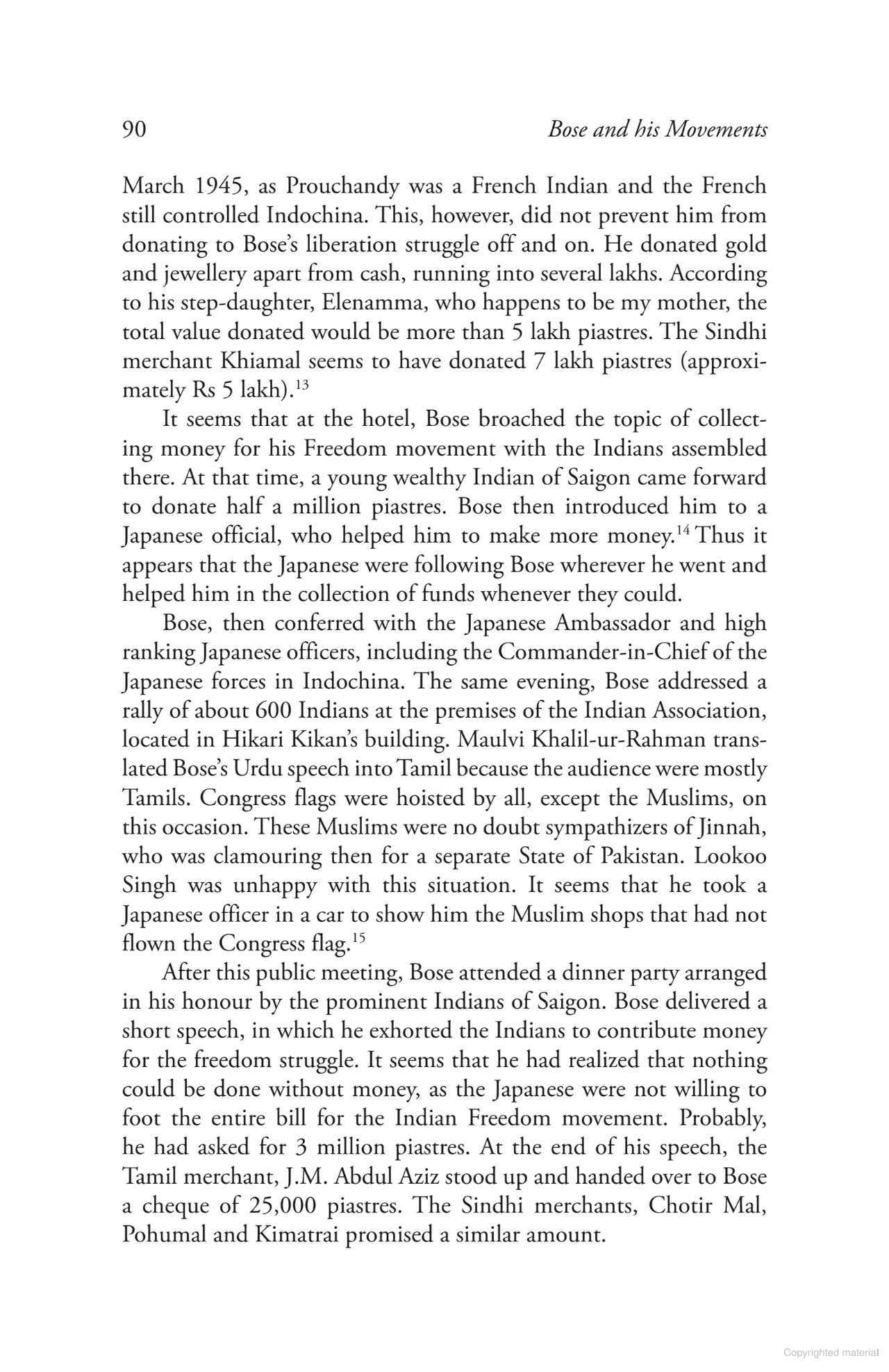
Bose and His Movements · J.B.P. More · 2025 · Page 90
"At the end of his speech, the Tamil merchant, J.M. Abdul Aziz stood up and handed over to Bose a cheque of 25,000 piastres. The Sindhi merchants, Chotir Mal, Pohumal and Kimatrai promised a similar amount."
Subhas Chandra Bose collecting funds in Saigon, March 1945 — Pohumal named directly
Indian Revolutionaries Abroad, 1905–1927 · Arun Bose · Northern Book Centre
The Pohoomull family is named in this collection of select documents on Indian revolutionary activity abroad — direct documentary evidence of merchant funding for the independence struggle from overseas branches of the Sindwork network.
Documented in revolutionary select documents — not family legend
Markovits, Page 144 · Bose & the Independence Movement
"It is probably in part to protect these economic interests that many Sindhi merchants in Southeast Asia gave their support to Subhas Bose and the Indian National Army."
The hidden engine of independence
Pages 298–299 · Appendix I & II
"I the undersigned Fatumal Keumal Hindu aged 33 years of Hyderabad Sindh do hereby agree to enter the service of Messrs Pohoomull Brothers viz Mr Moolchand, Mr Lekhraj, Mr Sahijram sons of Khiamul on the following conditions…" — 10 October 1901. A second contract, dated 1905, binds a servant to serve "the said master at Cairo (Egypt) or any other part or place" for three years.
The 1901 & 1905 employment contracts — naming the founding brothers
Download Full Text  →  Cambridge University Press, 2000
Rishi Khiani
The Author
Rishi Khiani
Direct descendant of the Khiani family. Eighth generation. Mumbai.
rishi@antfarm.in kaam.com/rishi
Home Read Docket Archive

The House of Pohoomull · 2026